Stockholm Metro Art: The Free Underground Gallery
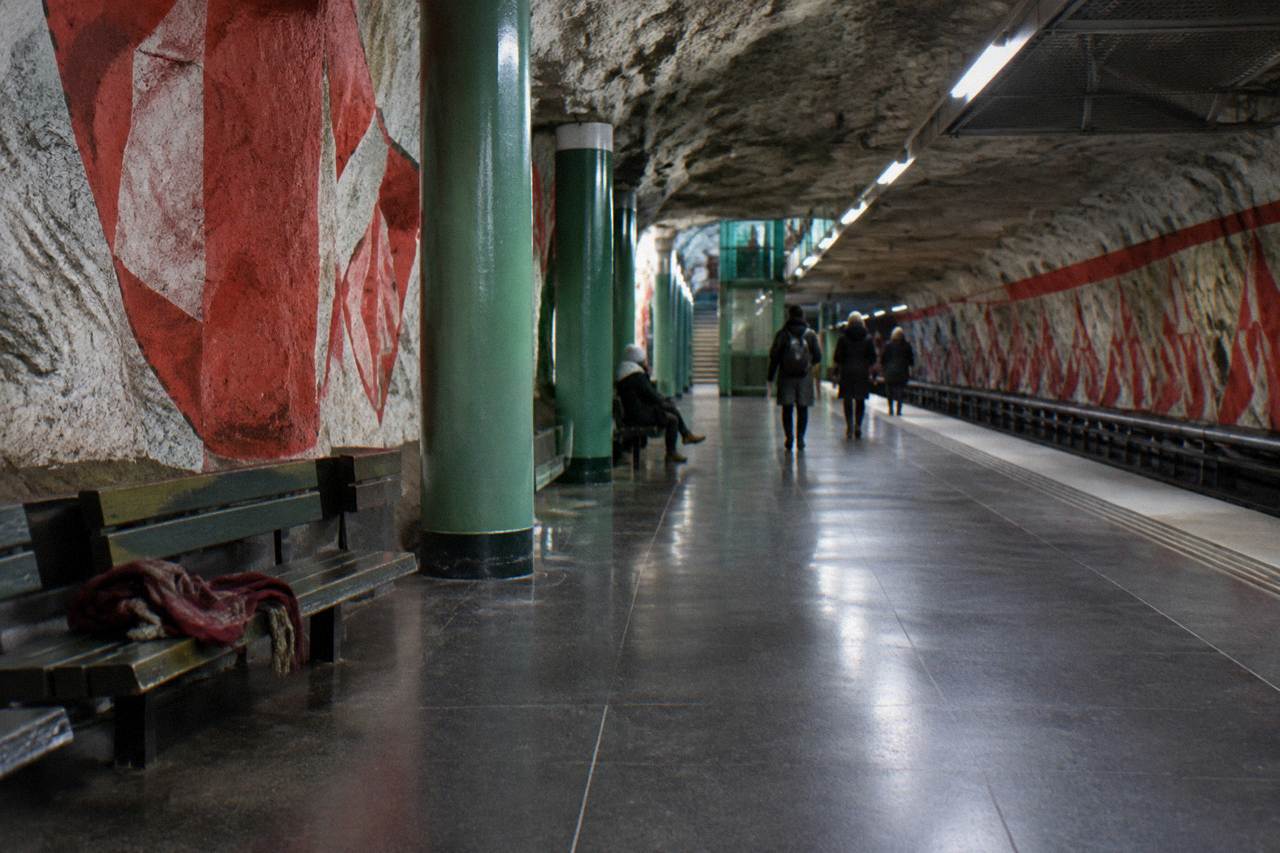
Stockholm's tunnelbana is routinely called the world's longest art gallery, and the description is not marketing. The art lives in the stations themselves, and the only admission fee is the ordinary SL transit ticket a visitor needs anyway.
Short answer
Yes, Stockholm metro art is free to see in the sense that no museum fee or separate art ticket exists: a normal SL transit ticket covers viewing the station art from the paid areas and platforms, and there is no free way into those zones without one.
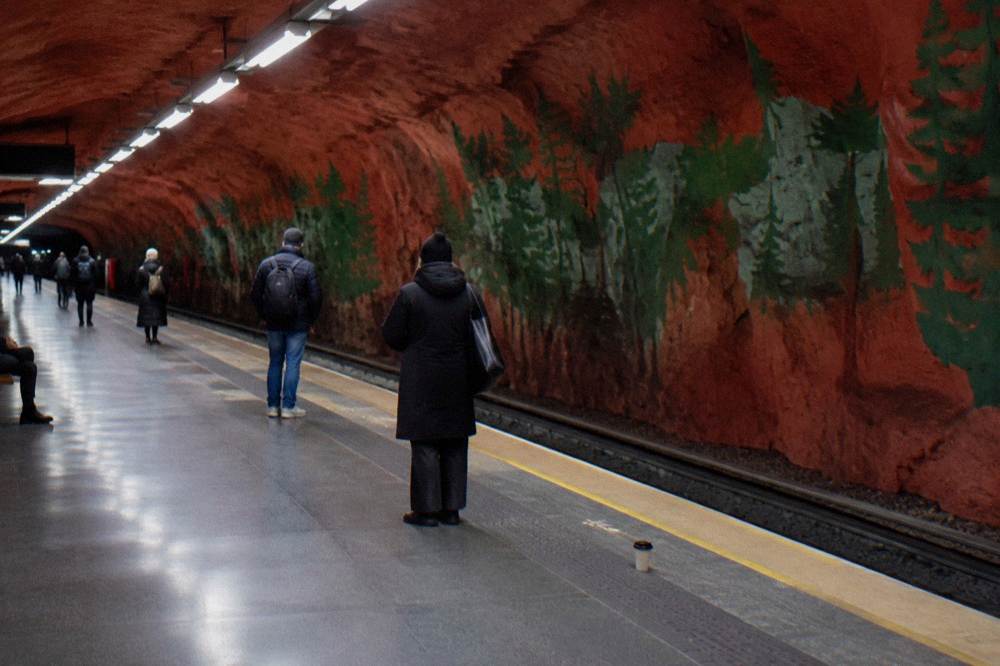
Stockholm's tunnelbana is routinely described as the world's longest art gallery, and the description is not marketing copy. The artwork lives inside the stations themselves, integrated into walls, ceilings and platforms rather than hung in a separate hall. For a visitor already holding a transit ticket, that makes the underground one of the city's most efficient free experiences: the gallery and the ride are the same purchase.
The fine print matters, though. The art is not free in the way a public square is free. It sits inside the paid zones of the transport system, so the honest framing is conditional, and this page keeps the condition attached to every claim. The record behind Free Things To Do In Stockholm treats the metro art as covered by a normal SL ticket, never as an unconditionally free attraction, and the rest of this guide follows that line.
Is Stockholm Metro Art Really Free To See?
Yes, in the sense that no museum fee and no separate art ticket exists: the artwork in Stockholm's metro stations is part of the transport system itself, and anyone holding a normal SL transit ticket can view it from the paid areas and platforms. There is no genuinely free way into those zones without a ticket, so the real price of the gallery is the price of a ride, and nothing more.
That conditional is worth dwelling on because it is where most guidebook copy goes soft. Some articles describe the metro art as simply free, which is true only if you were riding anyway. Others imply you can wander in off the street, which the verification record does not support: full access to the famous stations requires a valid ticket under SL's rules, and free concourses or entrances allow only limited views in some places. The accurate version is short. Buy the fare you need for the day, and the art comes with it.
The pairing works in the visitor's favour in one more way. The same SL ticket that unlocks the station art also covers the public transport ferries, including the boat run to Djurgården, which means a single fare can deliver an underground gallery, a harbour crossing and a free island park in one loop. Few transit systems anywhere offer that much per krona.
Which Stockholm Metro Stations Have The Best Art?
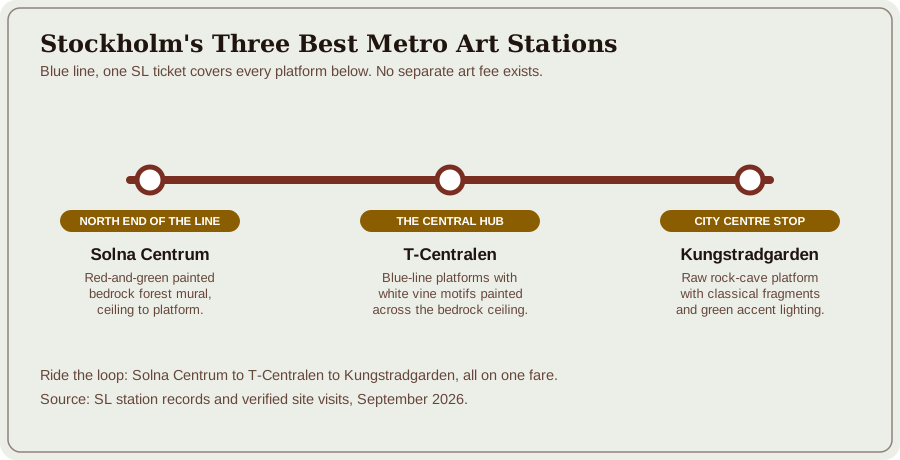
T-Centralen on the blue line, Kungsträdgården and Solna centrum are the three stations the verified record names as the system's most famous art stops, and all three can be viewed from the paid areas and platforms with a valid SL ticket. T-Centralen doubles as the system's hub, so the most-photographed platforms in Stockholm are also the ones most visitors pass through whether they plan to or not.
That last point is the practical one. You do not need to build a detour around the art, because the network funnels nearly every journey through or near the stations worth seeing. A visitor staying in the centre will change trains at T-Centralen, walk through its blue-worked platforms, and possibly surface at Kungsträdgården without ever treating the art as a separate errand. Solna centrum, further north, is the one that rewards a deliberate ride.
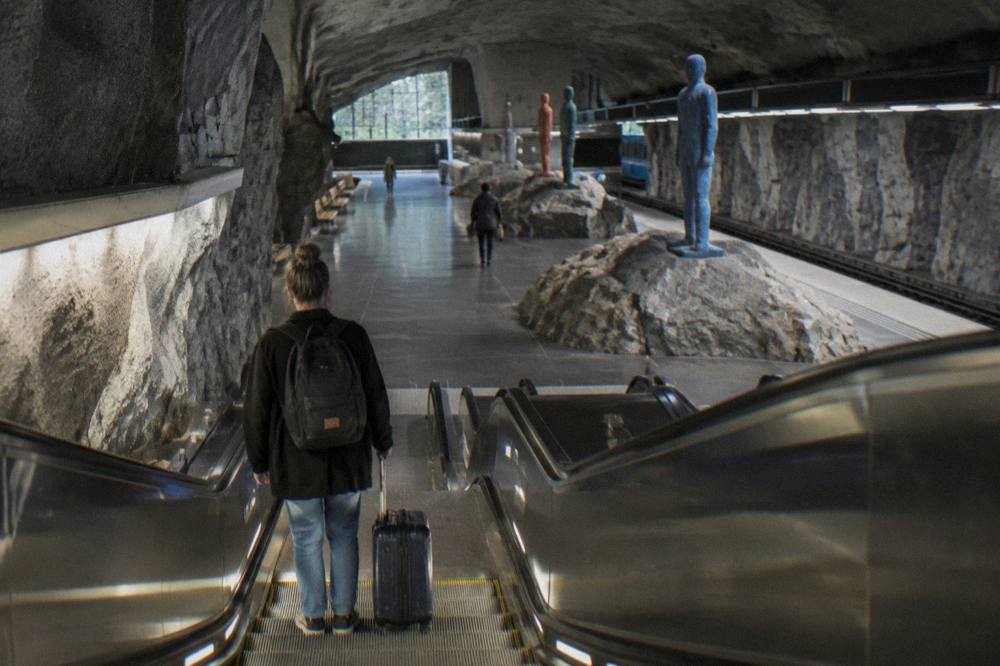
For anyone turning the stations into a self-guided crawl, the sensible shape is a loop rather than a list. Ride the blue line through T-Centralen, surface at Kungsträdgården in the city centre, then head north to Solna centrum before returning. The whole circuit costs the same single ticket, and the above-ground stretches between stations pass through squares and waterfront that are free in their own right.
The city's walking-tour roster ties into this footprint neatly. Five of the ten free walks verified for this site meet within the same city-centre area that T-Centralen and Kungsträdgården anchor, so an underground art crawl and a guided walk can share one afternoon without any extra transport cost.
A few practical notes make the crawl smoother. Keep your ticket with you at all times, since the paid areas you will be photographing sit behind the barriers, and you may need to show it if staff check mid-platform. Platforms at busy interchanges can be crowded, so step back from the platform edge while framing shots, and let commuting passengers pass before settling in for longer views. If you are travelling in a group, agree on a meeting point at each station in advance; the connecting passages at the hub station are long enough that people can drift apart between platforms.
Timing matters more than route order. The art is visible whenever the system runs, but the platforms are calmest outside the busiest commuting hours, which is when you will have the space to stand still and look. Midweek middays are the friendliest window for photographs; late Friday afternoons are the least. There is no need to rush, because the loop is short and the same ticket covers the whole ride, so you can linger at whichever station holds your attention and simply catch the next train.
One last habit worth adopting: treat each station as a place to look up rather than straight ahead. The work at these stops is built into ceilings, walls, and the carved rock itself, so the reward goes to people who pause at the top of escalators and at the ends of platforms rather than walking the fastest line to the train.
What Does One SL Ticket Actually Cover?
One normal SL ticket covers more than the metro ride: it includes the station art in the paid zones, the public transport ferries across the harbour including the run to Djurgården, and on arrival, Djurgården's parkland, which is free to enter with no ticket at all. The art, the boat and the island all hang off the same fare, which is what makes the metro art the city's best-value conditional free experience.
The ferry point deserves emphasis because it is the detail most visitors miss. The Djurgården ferries are ordinary SL services, not sightseeing cruises, so the crossing that tour boats charge for is included in a standard transit fare. The island itself is open public parkland, part of the Royal National City Park, and visiting costs nothing even though at least seven paid attractions, including the Vasa Museum and Skansen, stand on it. Being on the island never implies those museums are free, and the record keeps the two facts firmly separate.
| What | Cost | The condition |
|---|---|---|
| Metro station art | No separate fee | Requires a valid SL ticket for the paid zones |
| SL ferry to Djurgården | No separate fee | Same normal SL ticket, not a cruise ticket |
| Djurgården parkland | Free | No ticket at all; open to everyone |
| Paid museums on Djurgården | Admission charged | Standing on free parkland does not make them free |
A word on the wider museum picture, because the metro art sits inside a city whose free-museum reputation is out of date. Sweden's state museums reintroduced general adult admission after the 2022 funding change, so the blanket claim that Stockholm's museums are free no longer holds. The station art is different: it was never a museum, and its access rule has not changed. For the full picture, see Stockholm's free museums, honestly checked.
Can You Pair Metro Art With A Free Walking Tour?
Yes, easily, because three of the pooled free walks meet at or beside metro stations in the Old Town, and every one of them costs nothing up front: the guiding is free or pay what you want, with the tip settled at the end. The 2-Hour Free Walk, English Only meets directly outside Gamla Stan metro station, so a rider can step off a blue-line train and onto a guided walk within minutes.
All three walks below run on GuruWalk, a platform this site does not operate: each listing belongs to an independent local guide, and the walks are free or pay what you want rather than ticketed. The 2-Hour Free Walk, English Only is rated 4.69 across 1,433 GuruWalk reviews and meets outside Gamla Stan metro at Malartorget 8. The Multilingual Free Walk, rated 4.46 across 115 GuruWalk reviews, meets at the Gamla Stan t-bana exit and runs in German, English, Spanish, French and Italian. The Three Crowns Free Tour, rated 4.87 across 93 GuruWalk reviews, meets at Benny Fredrikssons Torg near the Tres taco joint and covers two hours of Old Town history.
| Walk | Platform | Rating | Duration | Meets at |
|---|---|---|---|---|
| 2-Hour Free Walk, English Only | GuruWalk | 4.69 across 1,433 reviews | 2 hours | Malartorget 8, outside Gamla Stan metro |
| Multilingual Free Walk | GuruWalk | 4.46 across 115 reviews | 2 hours | Gamla Stan t-bana, uppgang Munkbrohamnen |
| Three Crowns Free Tour | GuruWalk | 4.87 across 93 reviews | 2 hours | Benny Fredrikssons Torg |
The practical sequence writes itself. Ride the blue line into T-Centralen for the platform art, take the short hop to Gamla Stan, join a walk, and let the guide do the above-ground half of the day. Anyone weighing whether the format is worth it can read are free walking tours in Stockholm worth it, and anyone new to how the pay-what-you-want model works should start with how free walking tours actually work here.
What Else Is Free Near The Metro Art Stations?
A lot, once you surface: the Royal Palace's Outer Courtyard and its free Changing of the Guard, the Riksdag's free public guided tours with no advance booking, the City Hall's open courtyard, Kulturhuset's free public areas and Sergels torg all sit within walking distance of the central metro stations, and each is free under its own stated condition rather than blanket free entry.
The conditionality is the theme of this list, and it is deliberate. Stockholm's landmarks each run their own rule. The City Hall courtyard and entrance areas are public space, but the only way inside the main halls is a paid guided tour at 150 SEK for adults. The Royal Palace's apartments and museums charge a combined ticket of roughly 220 to 240 SEK, while the Outer Courtyard outside them is free and hosts the guard ceremony at no cost. The Riksdag runs genuinely free open tours, first-come with limited spots, and groups of ten or more book in advance. None of these rules transfers to a sibling institution.
| Attraction | Status | The condition |
|---|---|---|
| Changing of the Guard, Royal Palace Outer Courtyard | Free | 12:15 weekdays and Saturdays, 13:15 Sundays and public holidays, roughly 40 minutes |
| Riksdagshuset guided tours | Free | Open tours are first-come, no advance booking, limited spots |
| Stadshuset courtyard and grounds | Free | Public space; interior halls require a paid guided tour |
| Kulturhuset, Sergels torg | Free to enter | Building, library and some exhibitions free; theatre and events ticketed |
| Stockholm Public Library rotunda | Free | A public library, open to look around |
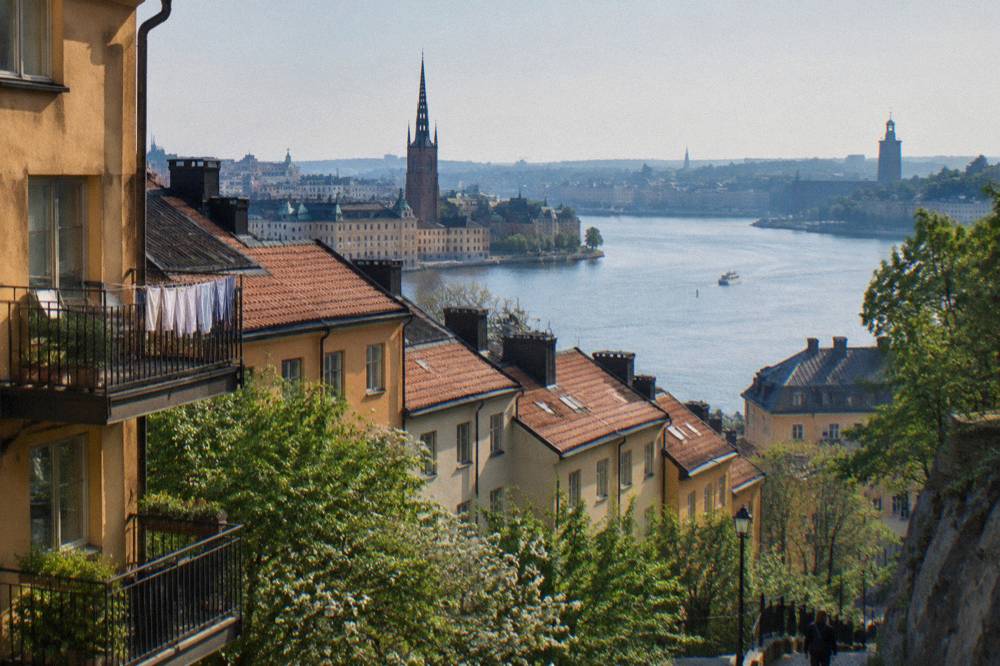
For a longer loop, the free viewpoints of Södermalm extend the same ticket-friendly logic above ground. Monteliusvägen and Skinnarviksberget are free public paths and hills with no admission and round-the-clock access, and a walk covering them runs two and a half hours on a pay-what-you-want basis. The Södermalm Viewpoints Walk, rated 4.81 across 348 GuruWalk reviews, meets at Mariatorget by the park statue, one metro stop's worth of distance from the central art stations.
A second afternoon could point in the other direction, toward history rather than views. The Viking History Walk, rated 4.96 across 1,100 GuruWalk reviews, meets at Stortorget in front of the Nobel Prize Museum, which is itself a free public square a few minutes' walk from the Gamla Stan station platforms. Two hours of Viking-era and early-Swedish history, free or pay what you want, starting from a square that appears on the free list in its own right.
Planning the transport side is straightforward, and getting around Stockholm on foot and by transit covers the details. The short version: the centre is compact enough that most of the above fits on foot, and the SL ticket earns its keep mainly on the art crawl, the Djurgården ferry and the Södermalm hop.
A practical way to sequence these is to sort them by what each one costs you in waiting rather than money. The guard ceremony runs on a fixed clock, so it anchors the middle of a day: arrive early enough to find a spot along the Outer Courtyard, watch the roughly 40 minutes, and then let the rest of the afternoon fill in around it. The Riksdag's open tours are the other time-sensitive item, because first-come with limited spots means the queue, not the calendar, decides whether you get in. If the parliament tour matters to you, treat it as the day's first stop rather than an afterthought, since nothing else on this list depends on beating a line.
Everything else is forgiving. The City Hall courtyard, Sergels torg, Kulturhuset's public areas and the library rotunda are all drop-in spaces, so they absorb whatever gaps the timed items leave. The same goes for Stortorget, which asks nothing of you at all. The two pay-what-you-want walks slot into the loose hours: the Södermalm loop suits a morning or a long light evening, and the Viking walk works as an Old Town anchor with the square itself as the meeting point.
One last note on expectations. Because each venue sets its own terms, the free list and the paid list overlap in the same buildings, and the boundary is usually a doorway rather than a fence. Standing in the City Hall courtyard is free; stepping into the halls is 150 SEK. Watching the guard change in the Outer Courtyard costs nothing; the apartments behind it do not. Plan around the doorways, and the free side of Stockholm holds together remarkably well.
Common Questions About Stockholm Metro Art
Is Stockholm metro art free?
Free with a condition: there is no art ticket or museum fee, but the art sits inside the paid zones of the transport system, so you need a normal SL ticket to see it properly. Free concourses may allow limited views in some stations, but full access requires a valid ticket.
Do I need a ticket to see the metro art?
Yes. The famous station art at T-Centralen, Kungsträdgården and Solna centrum is viewed from paid areas and platforms, and SL's rules require a valid ticket for those zones. The ticket you would buy for ordinary travel is the only ticket involved.
Which Stockholm metro station has the best art?
The verified record names T-Centralen on the blue line, Kungsträdgården and Solna centrum as the system's most famous art stations. T-Centralen is the hub most journeys pass through anyway, while Solna centrum rewards a deliberate ride north.
Does the SL ticket cover the Djurgården ferry too?
Yes. The public transport ferries to Djurgården are ordinary SL services covered by a normal ticket, not separate sightseeing cruises, and Djurgården's parkland is free to enter on arrival even though the museums on the island charge admission.
Can I combine the metro art with a free walking tour?
Easily. Three of the city's free walks meet at or beside Old Town metro stations, including the 2-Hour Free Walk, English Only, which meets directly outside Gamla Stan metro. All the walks listed on this site are free or pay what you want, with guides paid by tip at the end.