Is Hagaparken Free? What Stockholm's Haga Park Actually Costs
Hagaparken itself is free public parkland in Stockholm, but the butterfly house inside it is not. Here is exactly what a visit costs and what you get for nothing.
Is Hagaparken Free? What Stockholm's Haga Park Actually Costs
Hagaparken sits at the northern edge of Stockholm, a stretch of English-style parkland in the Haga district of Solna, laid out as a royal pleasure park for Gustav III and never quite finished the way he imagined it. The park is the reason many visitors make the trip north: broad lawns, old oaks, the Copper Tents, the Echo Temple, and the palace that gave the area its name. It is also one of the places where Stockholm's "free or not" question gets genuinely confusing, because the park and the attractions inside it follow completely different rules.
The short answer is that the park costs nothing. The long answer, which is what this page is for, involves a butterfly house, a palace that is not a museum, and a funding change that has made older guidebooks unreliable about almost everything in this city.
Is Hagaparken Free?
Yes, Hagaparken is free to enter, with no admission fee, no gate and no ticket of any kind. It is public parkland within the Royal National City Park, open around the clock, and walking its lawns, paths and shoreline costs nothing at any time of year. The one paid exception inside the park is Fjärilshuset Haga Ocean, the butterfly house and aquarium, which charges separate admission and is not covered by free entry to the park.
That distinction matters more here than at most Stockholm parks, because Fjärilshuset is not a small side attraction. It is the single biggest reason families come to Hagaparken, and it sits right in the middle of the park's most walked route. Plenty of visitors arrive assuming the park ticket covers it, then discover at the door that it does not.
The park's free status is not conditional in the way Stockholm's museum free evenings are. There is no age threshold, no weekday rule, no seasonal window. The lawns are simply public land. You can arrive at 7 in the morning or 10 at night, in July or in February, and walk in from any direction, including along the Brunnsviken waterfront that frames the park on three sides.
What you are walking through is one of the oldest designed landscapes in the Stockholm area. Gustav III bought the Haga estate and commissioned a pleasure park in the fashionable English style of his day, with follies and pavilions scattered through the grounds. Several of his grander plans, including a much larger palace, were abandoned after his assassination. What survived is a park of meadows and historic pavilions, and in more recent times the whole area became part of the Royal National City Park, the protected green corridor that stretches from Hagaparken down through Djurgården.
For a site that exists to separate genuinely free Stockholm from the things that only sound free, Free Things To Do In Stockholm records this the same way the record for Djurgården does: the park is one fact, the paid building inside it is a separate fact, and neither one tells you anything about the other.
What Does A Visit To Hagaparken In Stockholm Actually Cost?
A visit to Hagaparken costs 0 SEK for the park itself, plus whatever transport you use to reach it. Fjärilshuset Haga Ocean inside the park charges 279 SEK for adults, 210 SEK for seniors, and 179 SEK for children aged 3 to 15, with under-3s free. No other part of the park charges admission, and Haga Slott, the palace in the park's grounds, is not open to the public as a paid attraction.
Here is the full cost picture in one table, so nothing surprises you at a door:
| Part of a Hagaparken visit | Cost | Notes |
|---|---|---|
| The park: lawns, paths, Copper Tents, Echo Temple, waterfront | Free | Public parkland, open around the clock |
| Fjärilshuset Haga Ocean (butterfly house and aquarium) | 279 SEK adult, 210 SEK senior, 179 SEK ages 3-15 | Under 3 free; tickets bought on site |
| Haga Slott (the palace) | Not open for public paid entry | Not a museum; do not plan a visit around it |
| Getting there by SL transport | Normal SL ticket | Hagaparken is a short walk from two SL stops |
| Guided park tours or events, where run | Paid, where offered | Check the specific event's own page |
The transport line deserves a word. Hagaparken is not in central Stockholm, and the trip is the only unavoidable cost of a visit. The park sits between the Odenplan and Frösundavik areas, reachable on the SL network with a standard ticket, and the walk from the nearest stop is part of the experience rather than a chore. The getting around Stockholm guide covers the ticket options in detail, including which single ticket covers metro, bus and tram in one journey.
Two practical notes about the table. First, the Fjärilshuset prices are the operator's own current figures, confirmed on the butterfly house's ticket page, and they are bought on site rather than in advance. Second, Haga Slott is the building most visitors point at and assume they can tour. It is a functioning royal residence, not an open palace, and building a Hagaparken day around going inside it is the most common planning mistake in the area.
Is Fjärilshuset Haga Ocean Free If The Park Is Free?
No, Fjärilshuset Haga Ocean is not free, and free entry to Hagaparken does not reduce or waive its admission. An adult ticket is 279 SEK, a senior ticket is 210 SEK, children aged 3 to 15 pay 179 SEK, and children under 3 enter free. The butterfly house is a separate commercial attraction that happens to sit inside free public parkland, the same relationship Fotografiska has to its building or the Vasa Museum has to Djurgården.
This is the pattern that runs through almost every "is X free" question in Stockholm, and Hagaparken is a clean example of it. Free land, paid building. Djurgården works the same way: the island's parkland is free to walk, while the Vasa Museum, Skansen, Gröna Lund, ABBA The Museum and several more charge their own admissions on top of nothing. The park never subsidises the building, and the building never closes the park.
Fjärilshuset is genuinely worth knowing the price of before you travel, because it is marketed heavily to families and it is the park's only real all-weather attraction. Inside is a walk-through tropical butterfly house, kept warm and humid year round, plus a small aquarium section, the Haga Ocean, with tropical marine tanks. For a Stockholm visit in cold or wet weather it is one of the few indoor options in the north of the city, which is exactly why the price question comes up so often.
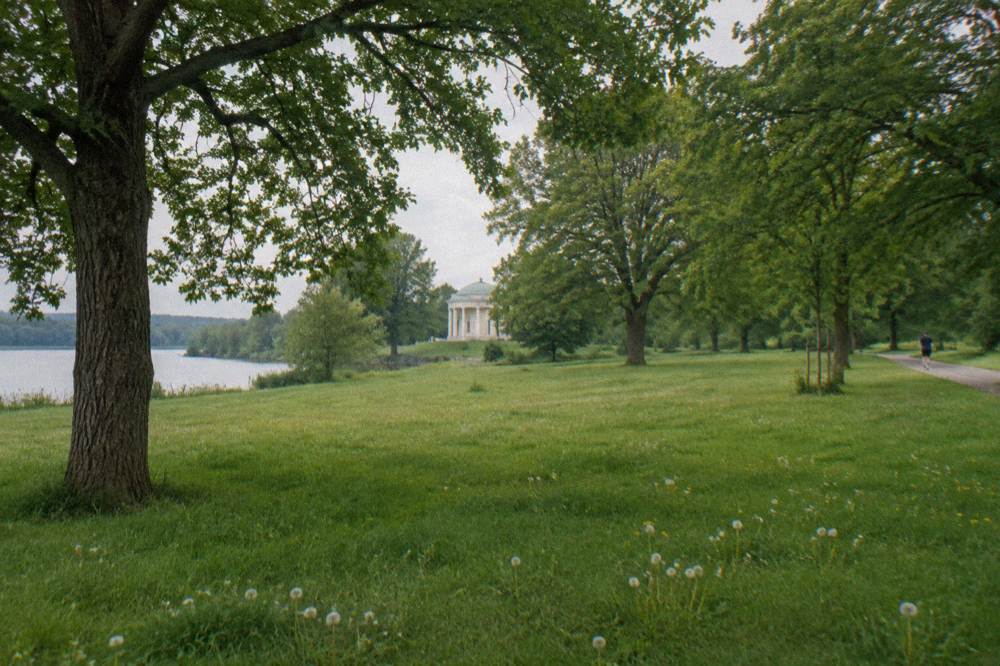
If the butterfly house is beyond your budget, the honest framing is this: the park around it is not a consolation prize. The Copper Tents, two copper-clad pavilions built as quarters for the park's guards, are one of the strangest and most photographed structures in the Stockholm area. The Echo Temple, a small pavilion on the water's edge, is a classic view of Brunnsviken. The lawns are wide enough that even a busy summer weekend leaves room to spread out. A full day in Hagaparken without entering Fjärilshuset is not a diminished day.
What Can You Do In Hagaparken For Free?
You can walk the full park, see the Copper Tents, the Echo Temple, the Turkish Kiosk grounds and the Gustav III pavilion's exterior, follow the Brunnsviken shoreline, picnic on the lawns, and reach the Haga ruins, all for 0 SEK. Every outdoor element of Hagaparken is free public space, and the park is large enough, roughly 1.5 kilometres along the water, that the free portion is the overwhelming majority of a visit.
The free list is longer than most visitors expect. Start at the southern end near the Copper Tents and work north along the water. The tents themselves, with their green copper facades and tent-like silhouettes, now house a café, but the exterior and the lawn in front of them cost nothing. The Echo Temple, a domed pavilion on a headland, sits over the water with the Brunnsviken bay behind it, and it is the park's signature view.
Further north sits the Gustav III pavilion, the park's most complete surviving building, a small neoclassical palace by the water. The pavilion's interior is run as a paid guided attraction by the royal palaces administration in summer, so treat it like Stadshuset: the exterior and setting are free, the guided interior is a separate ticket, and one never implies the other. Beyond it, the Haga ruins are the shell of Gustav III's unfinished great palace, abandoned after the king's assassination and left as a romantic fragment, free to walk up to at any hour.
The shoreline path is the connective tissue of all of this. Brunnsviken wraps around the park's eastern side, and the path along it is flat, paved in stretches, and popular with Solna's runners year round. In winter the bay sometimes freezes and the park becomes one of the quietest wide-open spaces in the Stockholm area, which is covered in more detail in free things to do in Stockholm in winter. In summer the same lawns fill with picnics and the long northern light lasts past 10 in the evening.
Practicalities are equally kind to a zero budget. There is no charge to bring a picnic, no charge to sit on the lawns, and no charge to wander the side paths through the older tree cover, where the park feels more like managed woodland than formal garden. The café at the Copper Tents is the only food option inside the park itself, and it is a paid stop like any café, so a packed lunch is the budget move. Toilets and benches are distributed along the main routes, and the park's size means you are never far from an exit if the weather turns.
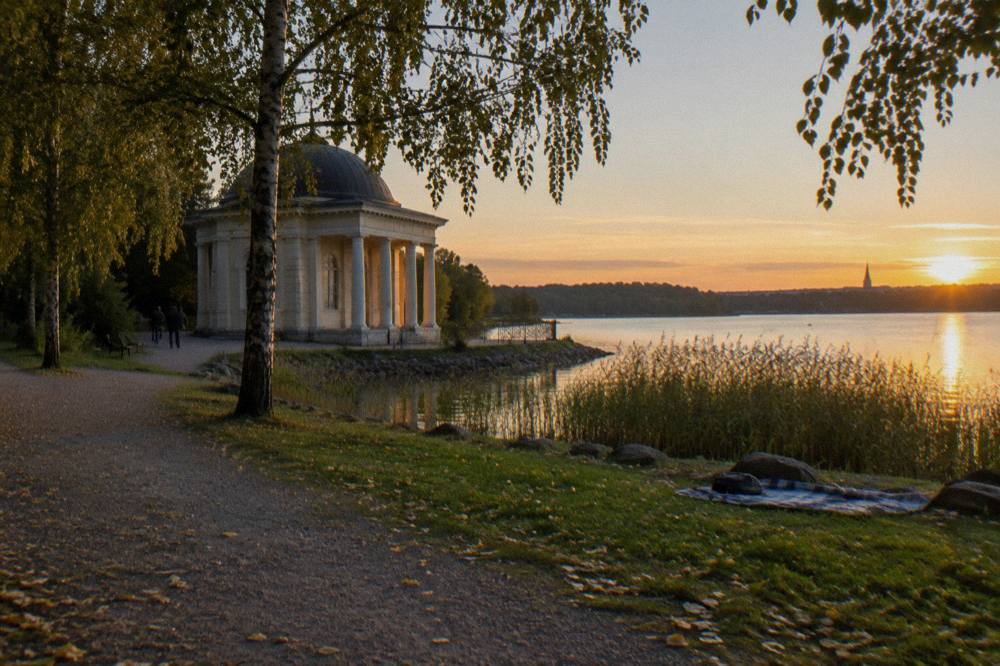
One honest note on crowds and season. Hagaparken is a local park first and a tourist sight second, so it behaves like one: near-empty on a February weekday, busy on a July Sunday afternoon, and at its most photogenic in late spring when the lawns are at their greenest. There is no bad free season, but there is a real difference in how much of the park you will have to yourself.
Is Hagaparken Worth The Trip From Central Stockholm?
Hagaparken is worth the trip if you have two or more days in Stockholm and want green space, water views and royal history without spending anything. It is not worth it on a one-day visit, when Gamla Stan, the free courtyard of the Royal Palace and the Södermalm viewpoints deliver more per hour. The park rewards a slow half day rather than a quick stop, and no pooled free walking tour covers it.
That last point is worth expanding, because it is the honest answer to a question this site gets asked in different forms. No pay-what-you-want walking tour in the current roster covers Hagaparken. The walks on this site, the GuruWalk listings and the freetour.com exclusives, all operate in central Stockholm: Gamla Stan, the city centre, Södermalm and Östermalm. A reader planning a Hagaparken visit who searches for a free tour of the park will not find one in this pool, and pretending otherwise would be dishonest. Hagaparken is a self-guided destination, and the self-guided walking tour of Stockholm approach is the right frame for it: bring a map, walk the shoreline, read the pavilions' history on the on-site signs.
For a one-day visit, the central free options beat it on density. The Changing of the Guard at the Royal Palace's Outer Courtyard costs nothing and runs at 12:15 on weekdays and Saturdays and 13:15 on Sundays and public holidays, lasting about 40 minutes. The Old Town's lanes, Stortorget and the palace exterior are all free public space. The Södermalm viewpoints, Monteliusvägen and Skinnarviksberget, cost nothing and are open around the clock. All of that fits inside a single day on foot, and Hagaparken does not.
For a second or third day, the calculation flips. Hagaparken is one of the largest free green spaces in the Stockholm area, it pairs well with a morning in central Stockholm, and it is the only place in the city where you can stand in a royal pleasure park that was never finished. If the weather cooperates, a Hagaparken afternoon is among the best 0-SEK afternoons in the region.
The pairing that works best is a morning walk and an afternoon park. Take a pay-what-you-want walk through Gamla Stan or the city centre in the morning, eat cheaply near a market square, then ride the SL network north and spend the late afternoon on Hagaparken's lawns. Done that way, the whole day costs one transit ticket plus whatever you choose to tip your guide, and the park half of it needs no planning beyond comfortable shoes.
Can A Free Walking Tour In Stockholm Cover Hagaparken?
No free walking tour in Stockholm's current pay-what-you-want pool covers Hagaparken, so the park is a self-guided visit. The closest thing to a guided equivalent is the Södermalm viewpoints walk, which covers free public viewpoints in the same spirit, and the central Stockholm walks, all of which stay in Gamla Stan, the city centre or Södermalm. Anyone who wants Hagaparken guided needs a private arrangement, not a pooled free tour.
That is the Södermalm Viewpoints Walk, a 2 hour and 30 minute pay-what-you-want walk rated 4.81 across 348 GuruWalk reviews, meeting at Mariatorget by the statue in the middle of the park. It is the walk that most closely shares Hagaparken's logic: free public space, water views and elevated ground, explained by a local guide. It does not go to Hagaparken, but a visitor who likes the idea of a guided walk through free parkland will recognise the appeal.
For the Old Town end of the spectrum, the walk this page pairs with is the Multilingual Free Walk, a 2-hour GuruWalk listing rated 4.46 across 115 reviews, run in German, English, Spanish, French and Italian, meeting at the Gamla Stan metro station exit. It covers Gamla Stan rather than Haga, but it fills the central-Stockholm half of a two-day plan, with Hagaparken as the self-guided second day.
Common Questions About Hagaparken In Stockholm
Is Hagaparken free?
Yes. Hagaparken is free public parkland with no admission fee, gate or ticket, open around the clock year round. The only paid attraction inside it is Fjärilshuset Haga Ocean, the butterfly house, at 279 SEK per adult.
Do you need a ticket for Hagaparken?
No. There is no ticket, booking or season pass for the park itself. Only Fjärilshuset Haga Ocean inside the park charges admission, and its tickets are bought on site.
Is Fjärilshuset free with the park?
No. Fjärilshuset Haga Ocean charges 279 SEK for adults, 210 SEK for seniors and 179 SEK for children aged 3 to 15, with under-3s free, whether or not you entered the park for nothing.
Can you go inside Haga Slott?
No. Haga Slott is a royal residence, not an open palace or museum, and it is not open for public paid entry. The Gustav III pavilion nearby runs paid guided interior tours in summer, but the park itself stays free.
How do you get to Hagaparken from central Stockholm?
Hagaparken is reached on the SL network with a normal SL ticket, and the walk from the nearest stop is short. The trip is the only unavoidable cost of a visit, since the park itself charges nothing.
Is Hagaparken worth visiting in winter?
Yes, if you want quiet green space. The park is open around the clock in every season, and its lawns and shoreline paths are among the emptiest wide-open spaces in the Stockholm area in winter. The butterfly house is the all-weather paid fallback.
The honest summary: Hagaparken is one of Stockholm's genuinely free destinations, in full, with no conditions attached to the parkland itself. The butterfly house inside it is the one thing that costs money, the palace is not visitable at any price, and no pooled free tour covers the area. Plan it as a self-guided half day, budget only your transit ticket, and the rest of the park asks nothing of your wallet.