Is Stockholm Metro Art Really Free? What The Ticket Actually Covers
Stockholm's tunnelbana art is free to see with a normal SL transit ticket, but not without one. Here is exactly what the ticket covers, which stations to see, and how to plan the ride.
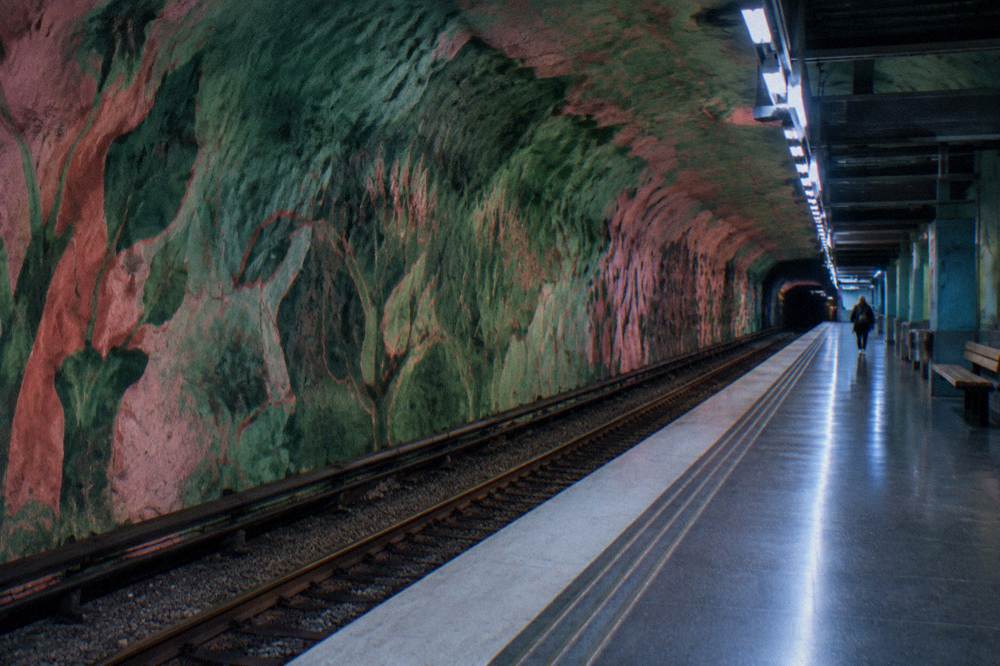
Stockholm's tunnelbana holds art in more than 90 of its roughly 100 stations: carved rock ceilings, murals, mosaics, sculptures and video installations, spread across a network that has been adding commissioned work for decades. Visitors often hear this described as "the world's longest art gallery" and just as often hear it described as free. Both framings need unpacking, because the art carries no museum fee but the stations sit inside the paid transit area controlled by SL, Stockholm's transit authority. The question is less "is it free" and more "what does the ticket that gets you to the art cost, and how far does one ticket stretch."
This page answers that question directly, station by station and ticket by ticket. For a fuller tour of the network's art history, the Stockholm metro art guide goes deeper, and the getting around Stockholm on foot and by transit guide covers the wider transport picture.
Is Stockholm Metro Art Really Free?
Yes, in the sense that no station charges a separate art or museum fee, and viewing the artwork is covered by a normal SL transit ticket. No, in the sense that the platforms sit inside the paid transit area, so there is no genuinely free way to see the famous stations without a valid ticket. SL's own rules require a ticket for the paid areas where the art lives.
That distinction is the whole answer, and it is worth stating plainly because so much travel content blurs it. The artwork itself was paid for long ago with public money and is not ticketed as an attraction. What is ticketed is the ride. A traveler holding a valid SL ticket is standing in front of the same murals and carved grottoes whether they boarded to commute or boarded specifically to look, and SL charges nothing extra for the second motive.
The comparison with the city's museums is what makes this worth spelling out. Since the 2022 government funding change, every state museum checked in this site's verification pass charges general adult admission: Nationalmuseum at SEK 160, Moderna Museet at SEK 170, Historiska museet at SEK 180. Against that backdrop, a transit ticket that doubles as an art gallery pass is a genuinely good deal, and it is the closest thing Stockholm has to a large-scale art experience without an entrance fee attached to the art itself.
There is a second reason the "free" label deserves care. The metro art is often listed alongside genuinely free sights in itineraries, and a traveler who arrives expecting a museum with no gate at all may feel misled when they hit the barrier. The experience is closer to a pay-one-price gallery: the fare is the admission, and once you are inside, every station on the network belongs to your afternoon. Framing it that way sets the right expectation and keeps the word "free" honest.
What Does A Ticket To See The Metro Art Cost?
A single SL ticket buys entry to the entire paid transit area, including every art station on all three lines, and the art adds nothing to that price. What the ticket costs in kronor depends on which SL product is bought, a single ride or a travelcard, and those fares are set by SL rather than by any art program. Check current fares on SL's own site before riding.
The fare structure is not printed here as a fixed number for a reason: SL adjusts fares, and this site's research pass recorded the access rule rather than a guaranteed price. What the pass did confirm, from SL's own information, is that viewing art in stations is covered by a normal SL ticket with no separate museum fee, and that a valid ticket is what gets you into the paid areas where the famous stations can be viewed properly.
There is a practical wrinkle worth knowing before you plan. Some station entrances and free concourses offer limited glimpses of tiling or installations from the unpaid side, and a determined person could argue that counts as seeing metro art for free. It does not really. The stations people travel to Stockholm to see, the blue-line grottoes, Kungsträdgården's archaeological garden, Solna centrum's painted forest, sit on platforms and past barriers. Treat the ticket as the price of admission and budget for one fare.
A second wrinkle follows from the first. Because the art is inside the paid area, the length of your ticket's validity window effectively sets the length of your gallery visit. A short single-ride ticket gives you one continuous journey, which is enough to pass through several stations but limits how long you linger on any platform. A travelcard with a longer window turns the network into something closer to a day pass for art, letting you exit, re-enter and double back to stations you liked. Deciding which product to buy is really deciding how much of the gallery you want to walk.
| Station | Line | What you see | Notes for the ride |
|---|---|---|---|
| T-Centralen | Blue | Blue-and-white vine patterns on carved raw rock | The blue line's cave-like platforms are the signature look |
| Kungsträdgården | Blue | Sculpted garden, artifacts, green-and-white stonework | Named for the former royal garden above it |
| Solna centrum | Blue | Red-and-green painted forest and social-realist murals | Farther north; pair with other blue-line stops |
| Rådhuset | Blue | Cave-like ceilings and sculpted elements | Close to Kungsholmen's courtyards |
| Stadion | Red | Rainbow arch celebrating the Olympic stadium | Bright and easy to photograph |
The table above is a starting five, not a complete list. A reasonable art ride covers a handful of blue-line stations in one direction, then hops to a red-line stop or two before the ticket's time window runs out. Riders who want the full picture usually plan a half day. Those with more time can add green-line stops near Hötorget, where some of the network's earlier commissioned work sits, and treat the whole network as a single sprawling exhibition with three wings.
A metro-art afternoon pairs naturally with a walking tour earlier in the day, since the best art stations connect to the neighborhoods worth walking anyway. The Three Crowns Free Tour, a 2-hour pay-what-you-want Old Town walk rated 4.87 across 93 GuruWalk reviews, starts at Benny Fredrikssons Torg near the Tres taco joint and covers Gamla Stan's story before you head underground. Details and meeting-point specifics live on the tour's page.
Which Stockholm Metro Stations Have The Best Art?
The blue line holds the most celebrated stations, starting with T-Centralen's carved blue-and-white rock walls and Kungsträdgården's sculpted underground garden, with Solna centrum's painted forest as the strongest farther-out stop. The red and green lines carry their own highlights, including Stadion's rainbow arch, so a single ticket reaches all three lines.
T-Centralen is where most visitors start, usually without meaning to: it is the network's central interchange, and its blue-line platforms were carved out of the rock rather than tiled over, leaving rough ceilings painted with blue vines and leaves. The effect is the one most photographed, and it sits a few escalators from where most travelers change trains anyway.
Kungsträdgården, one stop further, is themed around the Makalös palace that once stood above ground: sculpted arches, stone fragments and a garden transplanted underground, including trees and a reconstructed well. Solna centrum, several stops north, wraps its platform in a red-and-green painted forest with social-realist figures, and it is the station most often cited alongside T-Centralen in "worth the ride" lists.
The red line's Stadion station, with its rainbow arch honoring the Olympic stadium above it, is the easiest colorful add-on, and the green line carries earlier commissioned work near Hötorget. Riders with limited time should ride the blue line end to end and stop at anything that looks interesting through the window; the stations are close together and the walk between platform and exit is part of the show.
One planning tip that saves backtracking: the blue line has two northern branches, so check the destination display before boarding if Solna centrum is the goal, since not every train serves every branch. The same applies in reverse on the way back toward T-Centralen. Getting this right once means the whole ride flows as a single loop instead of a series of corrections, and platform time is looking time.
Can You See The Metro Art Without Buying A Ticket?
Only partially, and not the parts worth traveling for. SL's rules require a valid ticket for the paid areas where the substantial artwork sits, and while some free concourses and entrance halls may allow limited views of tiles or installations, the famous platform-level art at T-Centralen, Kungsträdgården and Solna centrum is behind the barriers.
This is where honest framing matters. A blog post that says "Stockholm's metro art is completely free" is describing something that does not quite exist: the art is free of a separate fee, not free of the transit system it lives inside. The closest free approximation is standing in an unpaid entrance hall and looking down toward a platform, which at some stations gives a real glimpse and at others gives you a view of escalators.
The honest advice is to buy the ticket and treat it as your gallery admission. Compared with the city's paid museums, whose general admission runs SEK 140 to SEK 180 for adults after the 2022 funding change, one transit fare for an afternoon of commissioned public art is one of the better values in the city. Travelers working through the free museums in Stockholm guide will notice the pattern: almost every free path in this city carries a stated condition, and the metro's condition is simply holding a ticket.
It helps to see how this site treats the same question elsewhere. The Royal Palace's Outer Courtyard is free while the apartments inside charge roughly SEK 220 to 240 for a combined ticket; Djurgården's parkland is free while the Vasa Museum on the island charges SEK 240 for an adult in summer; Hagaparken is a free park with a paid butterfly house inside it. The metro follows the same shape from the opposite direction: the thing you pay for is ordinary transit, and the art rides along at no extra charge. Every one of these pairs is stated with its condition, never as a bare "free."
How Do You Plan A Metro Art Ride In Stockholm?
Pick a handful of stations across two lines, buy a single SL ticket or travelcard, and ride between them inside the ticket's validity window, since the art is spread across roughly 100 stations and no single trip sees it all. A half day covers the blue line highlights plus one or two red-line stops comfortably.
Start at T-Centralen and ride the blue line toward either terminus, getting off at Rådhuset, Kungsträdgården and onward to Solna centrum. Then return to the interchange and take the red line one or two stops for Stadion. That loop hits the five most-photographed stations and can be done at a relaxed pace in three to four hours, including waiting time on platforms, which is when you actually look at the art.
A few practical notes make the ride smoother. The platforms are working transit infrastructure, so avoid the deepest rush hour if you want to stand and look. Signage in each station names the artists and the year of the work, which turns a ride into a self-guided tour without any booking. And since the art is on the platform side, transfers between lines at T-Centralen are themselves part of the route: the interchange's blue-line section is one of the headline pieces.
Weather and season barely matter here, which is part of the appeal. A rainy November afternoon is as good for the metro as a bright June one, and the stations are warm, lit and busy year-round. That makes the art ride the natural fallback for any Stockholm itinerary when the sky turns, and a sensible anchor for a day that starts above ground and finishes below it.
How Does Metro Art Compare With Stockholm's Other Free Sights?
The metro is the city's most concentrated free-with-a-ticket art experience, but it sits inside a wider set of genuinely free sights: the Changing of the Guard at the Royal Palace's Outer Courtyard, the free guided tours of the Riksdag, Monteliusvägen's viewpoint path on Södermalm and the open parkland of Djurgården all cost nothing at all, with no ticket condition attached.
That comparison is fair to both sides. The Changing of the Guard runs at 12:15 on weekdays and Saturdays and 13:15 on Sundays and public holidays in the Outer Courtyard, free to watch, no ticket needed. The Riksdag's public guided tours are free of charge with no advance booking for individuals. Monteliusvägen and Skinnarviksberget are open around the clock with no admission. The metro art is the only item on that list that requires buying anything, and what it offers in exchange is scale: nowhere else in the city can one ticket carry you past decades of commissioned work in a single afternoon.
Pairing the two halves of a day works well. A morning Old Town walk followed by an afternoon metro-art ride covers Stockholm's above-ground history and its underground gallery in one itinerary, and the Old Town walks on this site are all free or pay what you want. The Guided by Locals walk, rated 4.74 across 47 GuruWalk reviews, even hands you a poster at the end, and Dan Vernier's Old Town walk, rated 9.6 out of 10 across 225 freetour.com reviews, is one of two freetour.com exclusives in this site's roster of 10 free walks in Stockholm.
For travelers building a full free itinerary, the free things to do in Stockholm this week rundown frames the whole city by season, and the Stockholm on a budget guide adds the money-saving context around fares and food. The short version: the metro ticket is one of the few things on a budget itinerary you actually pay for, and it buys more art per krona than anything else in the city.
Common Questions About Stockholm Metro Art
Is Stockholm Metro Art Really Free?
The art carries no separate museum fee, and a normal SL transit ticket covers viewing it. The stations sit inside the paid transit area, so the art is free with a ticket rather than free without one. SL's rules require a valid ticket for full access to the platforms where the substantial work is displayed.
Do I need a special art pass for the Stockholm metro?
No. There is no art pass, no museum ticket and no guided-tour requirement. A regular SL ticket or travelcard is all that is needed to reach the paid areas where the artwork is installed, and SL charges nothing on top of the fare for looking at it.
Which metro line has the best art in Stockholm?
The blue line is the consensus pick. T-Centralen's carved blue-and-white rock walls, Kungsträdgården's sculpted garden and Solna centrum's painted forest are the most-photographed stations in the network. The red line's Stadion station, with its rainbow arch, is the strongest single stop outside the blue line.
How many Stockholm metro stations have artwork?
More than 90 of the network's roughly 100 stations contain commissioned art, added steadily over the decades. That scale is what earns the system its "world's longest art gallery" reputation, and it is why a single afternoon only scratches the surface.
Can I visit the metro art stations in the evening?
Yes, the metro runs late and the art does not close, since it is part of a working transit system rather than a museum with opening hours. Evening rides are quieter than rush hour, which makes looking at the platforms easier, though station lighting and service frequency vary by line and time.
Is a Stockholm metro art tour worth it over riding alone?
Riding alone with a ticket covers the art for the price of the fare, and signage in each station identifies the artists and years of the work. Guided tours add commentary and structure, but they are not required to see any of the work, and the self-guided ride is the free-with-a-ticket version of the experience.
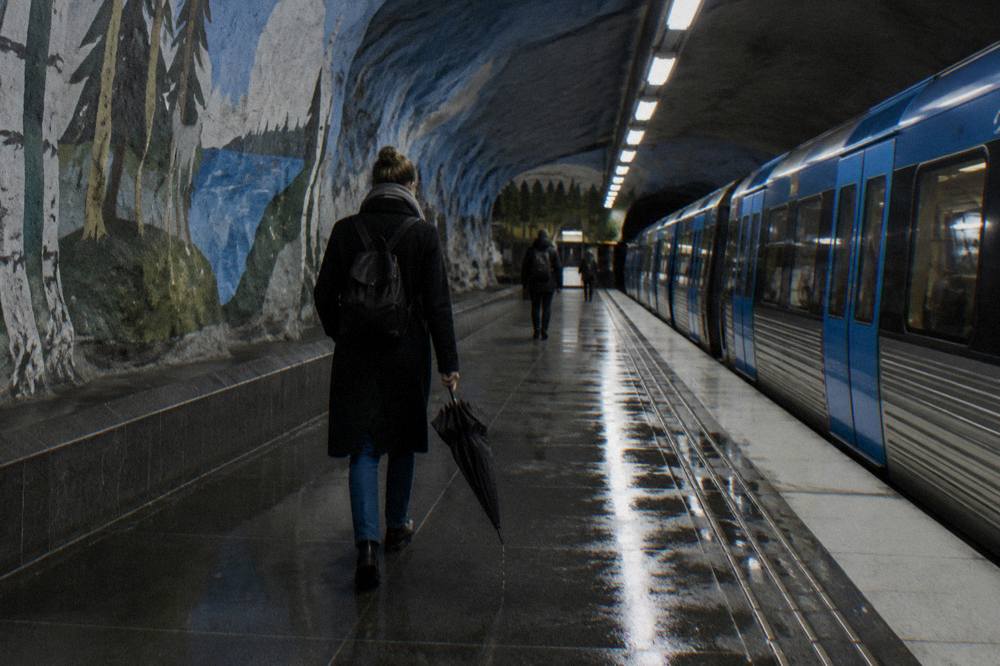
The verdict, restated plainly: Free Things To Do In Stockholm counts the metro art among the city's best values, with the ticket condition stated every time. Buy one fare, ride the blue line, and treat the platform as the gallery wall it was designed to be.